Avery Patterson · 25 September 2026
Fluctuating Pollution Levels and Pollinator Habitat Challenges in Poland's Industrial Heartlands
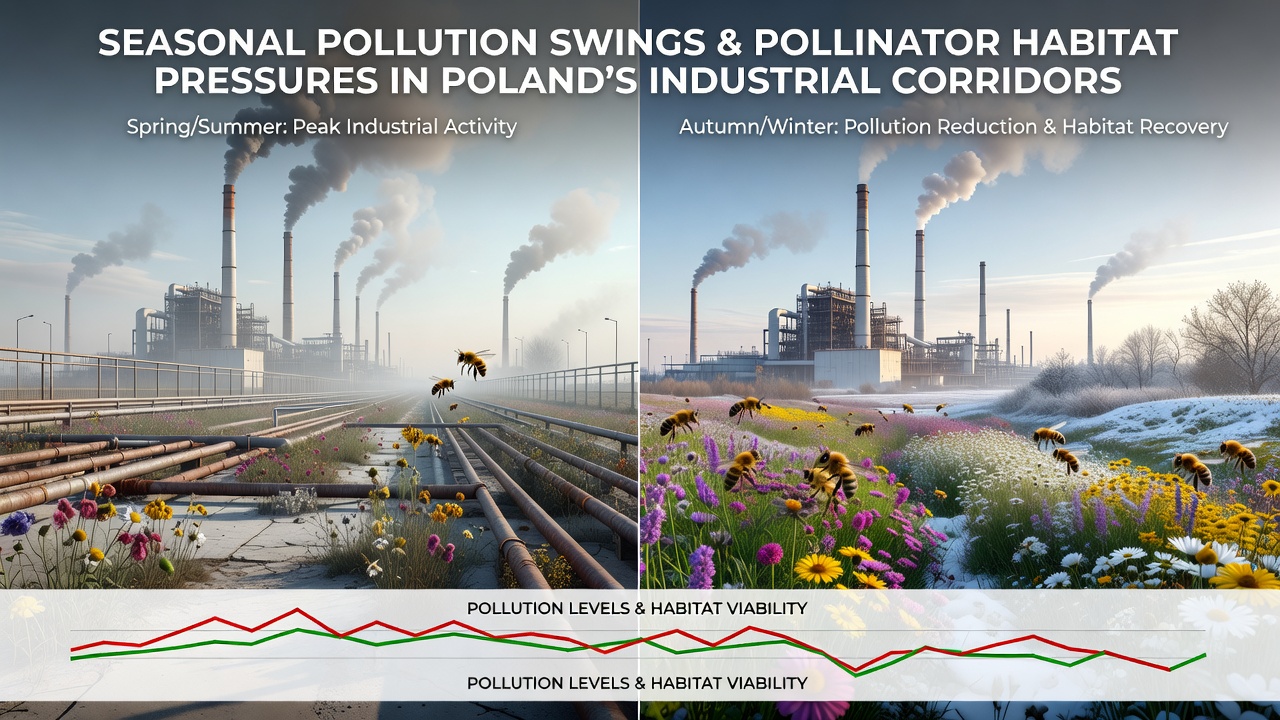
Poland's industrial corridors, stretching through regions like Upper Silesia and the areas around Łódź, experience distinct seasonal pollution swings that place measurable pressure on pollinator habitats, with data from monitoring stations showing elevated particulate matter and nitrogen oxides during winter months while summer ozone peaks create different stressors on flowering plants. Observers note that coal-fired plants and manufacturing facilities contribute to these patterns, where temperature inversions trap emissions close to the ground from November through February, reducing the availability of clean air for bees and other insects that rely on nearby meadows and field edges.
Understanding Seasonal Pollution Patterns
Research indicates that winter heating demands drive up emissions from both industrial sources and residential coal use, leading to PM10 concentrations that frequently exceed EU thresholds along transport routes and factory zones, whereas spring thaws and increased rainfall help disperse some pollutants but also wash contaminants into soil layers that support wildflower growth. Data collected through September 2026 from networks operated by regional environmental agencies shows consistent swings, with autumn months often registering the sharpest transitions as temperatures drop and inversion layers form again. Those who've studied these cycles point out that pollinators such as bumblebees and solitary bees face reduced foraging windows when haze limits sunlight and alters plant blooming times.
What's interesting is how these swings interact with land use, since industrial corridors often border agricultural strips where pesticide application coincides with higher summer ozone levels that damage leaf surfaces and diminish nectar production. Studies from Polish universities have tracked colony health metrics, revealing lower overwinter survival rates in hives located within five kilometers of major emission points compared to more distant reference sites. And the reality is that habitat fragmentation compounds the issue, leaving fewer continuous corridors of diverse flora for migrating or nesting insects.
Pressures on Specific Pollinator Species
Evidence suggests that hoverflies and certain butterfly populations experience habitat compression when pollution reduces the density of preferred host plants, while managed honeybee operations report higher rates of colony stress during periods of elevated sulfur dioxide. Researchers discovered through field sampling that soil acidification from deposited pollutants alters root systems of legumes and other nectar sources, shortening bloom duration by up to three weeks in affected zones. But here's the thing: these effects vary by corridor, with the Katowice-to-Kraków belt showing stronger winter impacts and the northern stretches near Gdańsk exhibiting more pronounced summer ozone influences due to prevailing wind patterns.
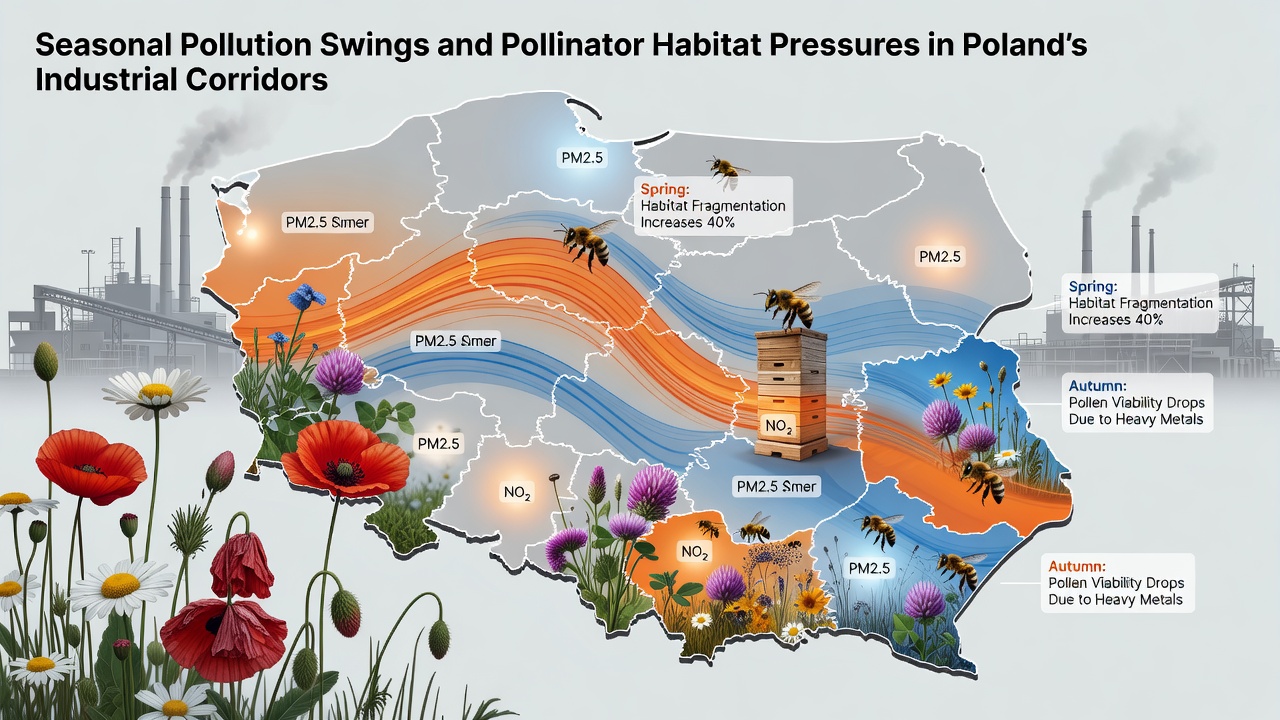
One study revealed that planting buffer strips with pollution-tolerant species can partially offset nectar loss, though establishment success depends on local soil remediation efforts. Figures reveal that areas with active habitat restoration programs recorded 15 to 20 percent higher pollinator diversity indices during the 2025-2026 monitoring season. Experts have observed that seasonal swings also influence pathogen loads, as stressed plants become more susceptible to fungal infections that indirectly affect visiting insects.
Monitoring Efforts and Regional Responses
According to reports from the European Environment Agency, integrated air and biodiversity monitoring programs have expanded across Central European industrial zones, providing datasets that link emission inventories directly to habitat quality metrics. Polish authorities coordinate with local research institutions to deploy sensors that capture real-time swings, allowing for targeted interventions such as adjusted emission controls during inversion events. Turns out these combined datasets help identify priority corridors where pollinator habitat corridors can be strengthened without conflicting with ongoing industrial activity.
People who've examined the data note that voluntary industry participation in emission reduction trials has produced measurable drops in peak winter pollutant loads in select test areas. Yet long-term trends still show the need for continued coordination between energy sector upgrades and agricultural practices that preserve floral diversity. Academic sources continue to publish findings that refine understanding of how specific chemical mixtures affect different life stages of pollinators, from larval development to adult foraging behavior.
Conclusion
Seasonal pollution swings in Poland's industrial corridors create layered pressures on pollinator habitats through direct air quality effects and indirect changes to plant communities, with ongoing monitoring through 2026 providing clearer pictures of both challenges and mitigation pathways. Data shows that integrated approaches combining emission management, habitat restoration, and species monitoring offer practical routes for maintaining biodiversity alongside industrial operations. Researchers continue to refine models that predict how future shifts in energy sources might alter these seasonal dynamics across the affected regions.