Avery Patterson · 2 September 2026
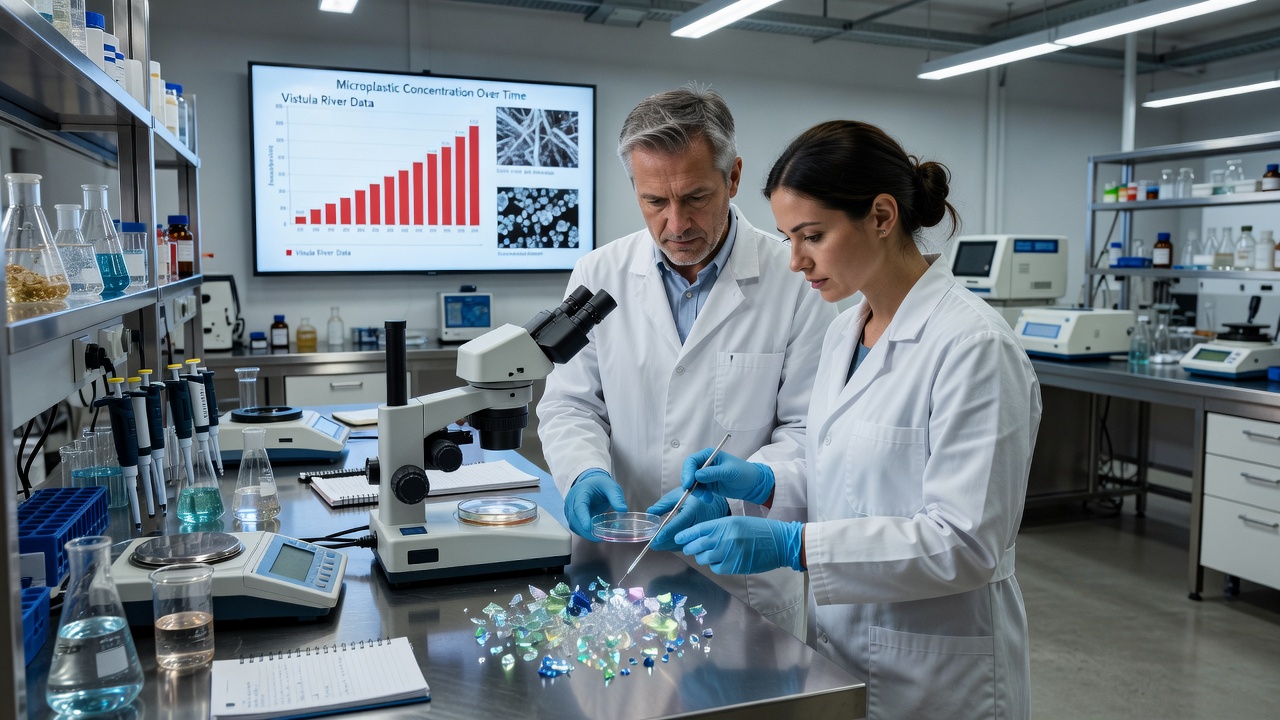
Researchers at Terra Lab have documented a significant increase in microplastic concentrations along the Vistula River. Samples collected between March and September 2024 revealed average levels 28 percent higher than measurements taken in the same locations five years earlier. The study focused on segments near Warsaw, Krakow, and the river's mouth at the Baltic Sea.
Sampling Methods and Key Findings
Teams used standardized filtration techniques at 12 monitoring stations. Surface water, sediment, and fish tissue samples were analyzed for particles smaller than five millimeters. Results indicated polyethylene and polypropylene as the dominant polymers, likely originating from packaging waste and synthetic textiles. Urban wastewater treatment plants were identified as major point sources, while agricultural runoff contributed secondary fibers. Concentrations peaked downstream of industrial zones, reaching 4,200 particles per cubic meter in some surface samples.
Seasonal variation showed higher loads during spring floods, when river discharge mobilizes accumulated debris from riverbanks. Laboratory controls confirmed that atmospheric deposition accounted for less than 10 percent of total particles, underscoring local anthropogenic inputs as the primary driver.
Ecological Risks and Recommended Actions
Elevated microplastic levels pose threats to aquatic organisms through ingestion and chemical leaching. Benthic invertebrates and juvenile fish exhibited the highest exposure rates in sediment cores. Terra Lab scientists recommend expanded monitoring networks, stricter industrial discharge limits, and public campaigns to reduce single-use plastics. Collaboration with municipal authorities is underway to pilot advanced filtration at two treatment facilities by mid-2025. Continued research will track whether mitigation measures produce measurable declines in future sampling rounds.